Back to: Worship: Word and Table
Start here
Welcome to the Table
Thanks for being part of my own Eucharistic journey!
Read before class
My Story at the Table
In the musical adaptation of Les Misérables, a grieving Marius wanders through the wreckage left by the barricade battle. Arriving in the pub that was once so alive with the dreams of revolution, he begins to sing:
“There's a grief that can't be spoken
There's a pain goes on and on
Empty chairs at empty tables
Now my friends are dead and gone
Here they talked of revolution
Here it was they lit the flame
Here they sang about tomorrow
And tomorrow never came” (1)
It’s a scene of such overwhelming sadness. The tables and chairs once filled with the boisterous laughter and hope now lie scattered, broken and empty. Those that had raised their wine glasses to one another, toasting a vision of a new world, were themselves, those that escaped death, scattered, broken and empty.
“The very words that they had sung
Became their last communion
On this lonely barricade at dawn.” (2)
Their last communion. That’s a powerful image isn’t it? It causes us to think of another “last supper” more than 1700 years earlier than the revolution in France. It was also a night that turned into a dawn of disaster with disciples scattered, broken and empty - their dreams of a kingdom restored - crushed under the withering sight of the crucifixion. At supper they had watched Jesus break bread and hand it to them - this is my body broken for you - afterwards he raised the cup of wine - “Drink of it, all of you, for this is my blood of the covenant, which is poured out for many for the forgiveness of sins.” Then he uttered something so stirring that their hearts could only be elevated with hope:
“I tell you I will not drink again of this fruit of the vine until that day when I drink it new with you in my Father’s kingdom.” (Matthew 26:29)
They were certain it was imminent! The kingdom was coming. The Messiah was here! This was the culmination of the longing of their hearts. They were joyous at that moment.
And when they had sung a hymn, they went out to the Mount of Olives. (v. 30)
Jesus raised his glass with the revolution hungry disciples and sang a hymn.
Then the nightmare began.
At the barricade of Golgotha they were certain that the words they had sung were their last communion.
But they were wrong…
Hope did not die at Calvary. The suffering of Jesus and his triumph over death inaugurated a day of real and lasting hope.
“Blessed be the God and Father of our Lord Jesus Christ. Because of his great mercy he has given us new birth into a living hope through the resurrection of Jesus Christ from the dead and into an inheritance that is imperishable, undefiled, and unfading, kept in heaven for you.” (1 Peter 1:3–4 CSB)
We do not sing of empty chairs at empty tables. We sing of a day coming marked by feasting and joy.
We will feast in the house of Zion
We will sing with our hearts restored
‘He has done great things’ we will say together
We will feast and weep no more (3)
Jesus set the very heartbeat of Christian worship in place at the table with his disciples. In the presence of their enemies he set a table for them. “Do this.” As often as they gathered they were to look back at that night, that death, that resurrection, that eternal promise! As often as they gathered they were to look forward to that day of freedom, of earth’s release from bondage and of the never ending feast of joy.
Where has that joy gone? Why have the hope breathing, joy stirring words and signs of Jesus been reduced to so many empty chairs at empty tables? Oh we’re there. Surely, multitudes of the chairs are full but full of phantoms - empty of joy, warned that we may not be worthy, ticking off our sins in confession before we reach that solemn moment where we remember only… his suffering and our guilt. No wonder we only do it once a month, or quarter, or year. Who would want to go through that sad ritual as “often as we gather?”
What if the tables overflowed with the signs of hope?
What if the chairs were filled with grateful pilgrim saints, singing not only of amazing grace but an amazing future?
What if we weren’t scattered, broken and empty but filled with joyful expectation?
Other Voices
Often Lord’s Supper services are characterized by a funereal atmosphere, complete with somber, droning organ music as the ministers or deacons distribute the elements to the congregation. The congregation is sometimes led to believe (if for no other reason than the omission of pastoral teaching) that the point of the meal is to screw up one’s face and try to feel sorry for Jesus. This is often accompanied by a psychological attempt to meditate on the physical pain of Jesus’ sufferings — an emphasis that is markedly understated in the biblical text itself.1
I’ve lost track of the number of startup evangelical churches—again, who are sincerely seeking to reach the world for Christ—whose practice of Communion is frankly a sacrilege. One has to give them credit for, yes, seeking out the lost and taking down unnecessary cultural/religious barriers. And one has to also praise them for at least offering Communion. But in many churches, it is something that is presented during the offering, at a small table holding crackers and juice on the side aisles for those who feel so led to partake. Sometimes this is accompanied by the words of institution, but sometimes it is not.2
What the Numbers Say
In my experience of non-denominational and charismatic churches, the Lord’s Supper lives on the margins of evangelical worship. Are there numbers to back this up? Consider three surveys that provide a snapshot of communion frequency.
In February 2013 the National Association of Evangelicals put the question to its leaders, a monthly poll of its board of directors, asking how often their churches serve communion. Seventy percent said once a month. The rest were spread roughly evenly among every other month, quarterly, and weekly.3
The Baptists are not non-denominational but they are a good sample as most non-denominational churches share the same “low-church” approach to their worship services. In 2012, a LifeWay Research survey of 1,066 Southern Baptist pastors found a slower rhythm still. Fifty-seven percent observed the Lord’s Supper quarterly and 18 percent monthly. Another 15 percent served it five to ten times a year, and 8 percent fewer than four times a year. Only 1 percent served it weekly. Region mattered: monthly communion was far more common in the Northeast (67 percent) and West (45 percent) than in the Midwest (17 percent) or South (14 percent).4
More telling for our study is a 2020 survey by Scott Thumma of the Hartford Institute for Religion Research that took a close look at independent and nondenominational fellowships. It didn’t ask about the frequency of the supper but instead asked how well “Lord’s Supper, Communion or Eucharist” describes a church’s regular weekend worship. Twenty-two percent said very well and 32 percent said well. Thirty-four percent said sometimes, 7 percent slightly, and 5 percent not at all.5 That is not a frequency count, but it shows how unevenly the Table is woven into Sunday worship, even in churches that may be large and well resourced.
We can conclude that weekly communion is the exception in evangelical churches, and in many of them the Table shows up monthly, quarterly, or only now and then. These are snapshots, not the whole story. Questions of how well the congregations understand the supper, what meaning the church assigns to it, and the pastors’ approach are all worthy of investigation.
My Background
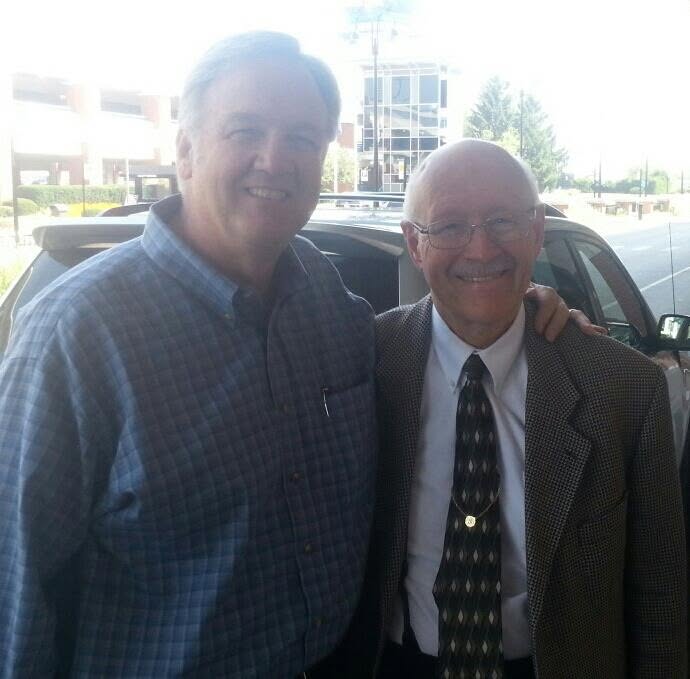
As a student at Oral Roberts University, under the mentorship of the Rev. Dr. Robert Stamps, I was introduced to an approach to the Eucharist that I had not understood as a younger Christian. Most people in those days only knew of ORU from the Oral Roberts television show. It featured the very polished World Action Singers and video clips of the campus life. Interestingly enough, on this Pentecostal campus there was a strong liturgical stream and emphasis on the Eucharist. Every Monday thru Friday there was a communion service in the small chapel at noon. 20 to 30 students would gather to sing songs of praise, participate in a responsive Psalm from the Lectionary, listen to a scriptural devotion and receive the Eucharist. The elements would be on the altar at the front. Dr. Stamps or an appointed chaplain would consecrate the elements. Students would file down to the front to take a piece of bread and dip it into the cup, returning to their seats as we would sing songs of worship. Very popular in those days were some of the songs from a Catholic group called the Word of God Community in Ann Arbor, Michigan. We would often sing:
“Take our bread we ask you
Take our hearts we love you
Take our lives oh Father we are yours.
Yours as we stand at the table you set;
yours as we eat the bread our hearts can't forget.
We are the sign of your life with us yet,
we are yours, we are yours.
© 1966, Joe Wise.
These songs written by Catholic charismatics were resonating deeply in the hearts of students who were predominately protestant!
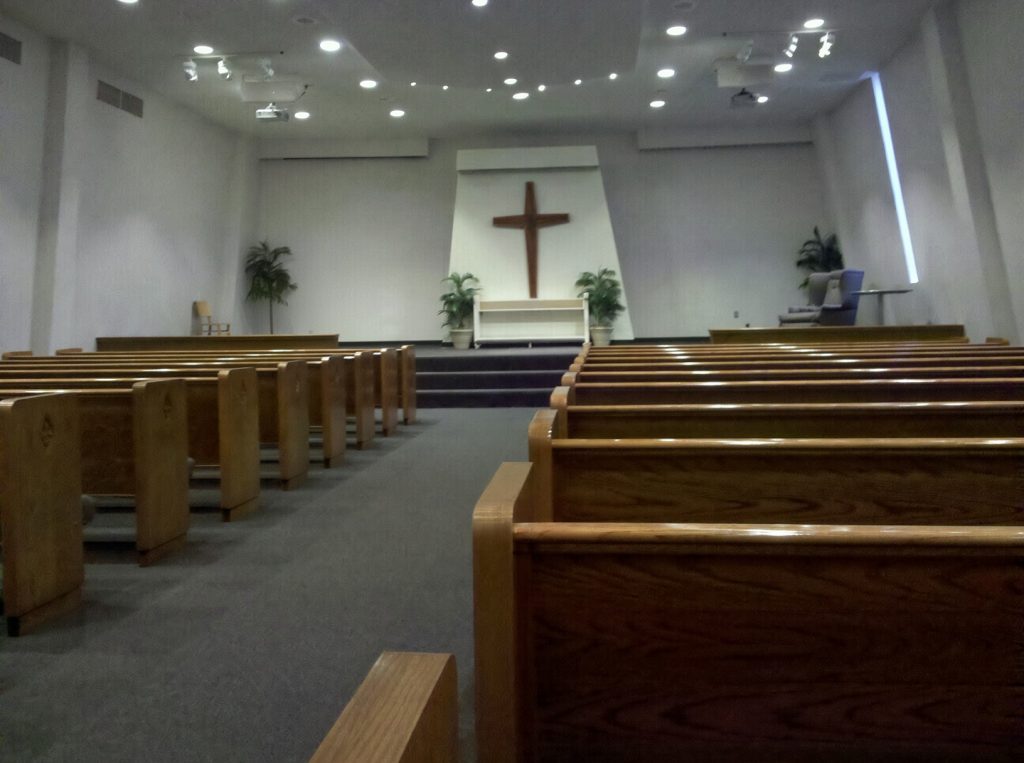
Every Friday night, about 300 students would cram into every space of the chapel. A sexton would incense the room as they were coming in and the praise would begin to rise. Psalms, hymns and spiritual songs (often in tongues) would flow together in worship. Occasionally a prophecy would be shared or a message in tongues followed by an interpretation. Again, there would be a responsive Psalm and a message. Then we would stand together and begin to sing. From the back of the room a cross was lifted up and began to process down the aisle followed by students holding the bread and cup. These were laid on the altar, consecrated and served. The service would conclude with joyful songs of praise. On Sunday evening, 1200 or more students would gather in the round in the cafeteria and we would do it all again. This was a remarkable experience for young people who were coming from Assembly of God, Baptist, Methodist, and Non-Denominational churches. For most of these students, this just wasn’t how communion was done! Where was the somberness? The organ playing hymns in minor keys? The grim men passing trays with warnings to have all one’s sins confessed. It wasn’t that there wasn’t reverence, or remembrance of what Christ had suffered, it was that there was a holy joy and the recognition that we were meeting and feeding upon Christ in those moments.
The emphasis at ORU on worship, word and table was life-giving and intriguing to me. I kept wondering where one could find this on a Sunday morning? You could usually find two out of three. There would be a church with strong preaching and passionate praise but communion was relegated to once a month, or a quarter or even a year! You could find churches that celebrated the Eucharist weekly but usually were not open to the gifts of the Spirit or lacked strong biblical preaching.
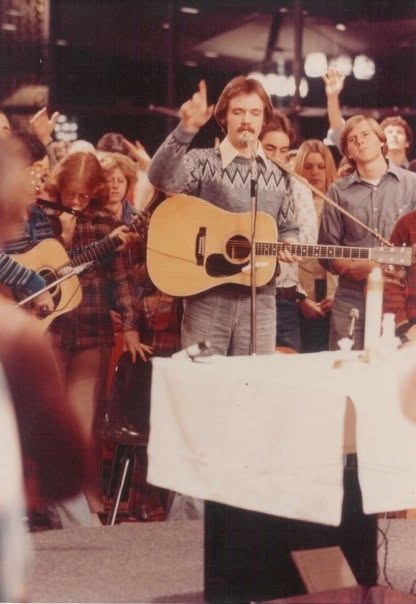
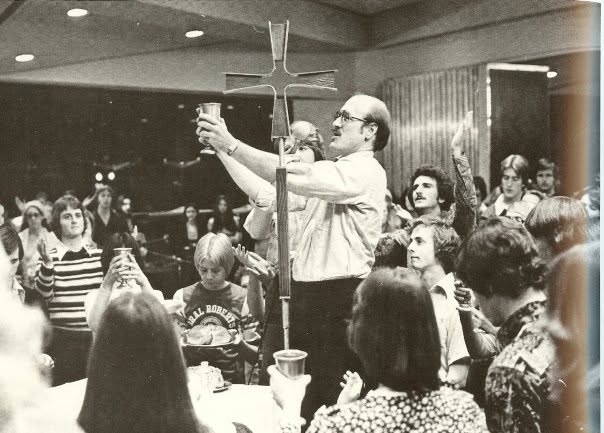
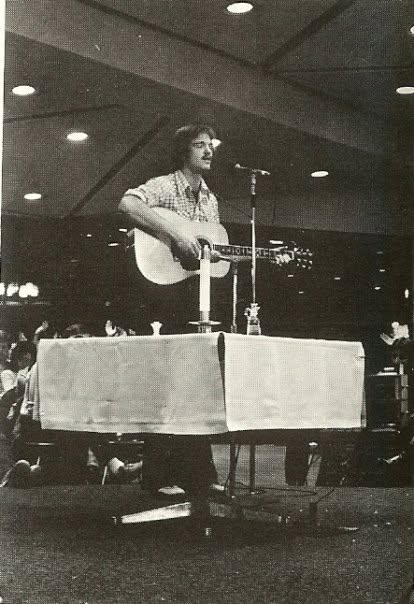
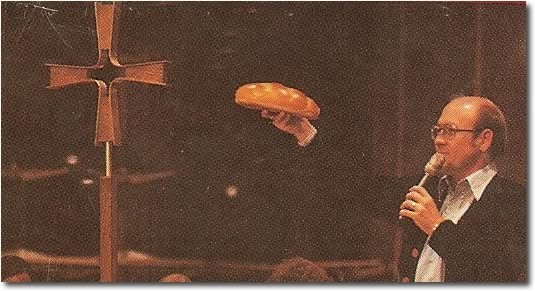
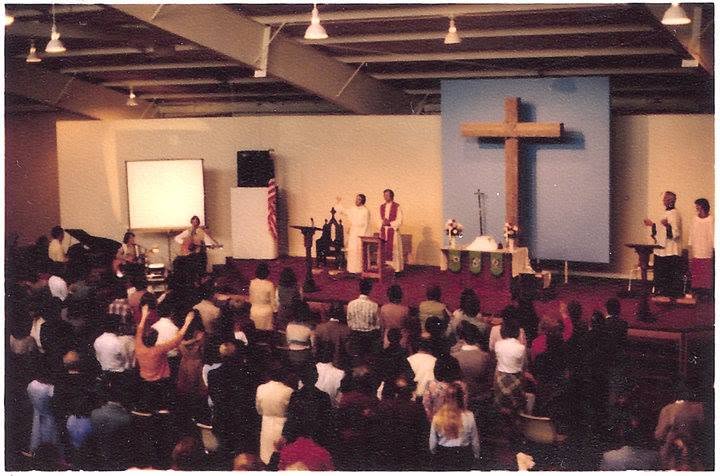
In 1980 I moved to serving in a Charismatic Episcopal church in Northern Virginia in part because of their approach to worship called “Three Streams, One River.” The view of the church was that there were three important streams in church history: the Catholic (Sacramental) stream, Protestant stream and Pentecostal stream. Their goal was to blend these separate streams into one river. The desire of the church was to be Pentecostal in its worship, Protestant in the pulpit and Sacramental (embracing baptism and weekly communion). They provided a vocabulary and framework for what I had experienced at ORU. One of the problems with this twenty-something worship leader was the thought that I knew better than others. I would gently chide them that they were two streams and a creek. “You folks have the sacramental and preaching parts down solid but we need to make more room for the moving of the Spirit!” They tolerated me.
After a change in leadership at the church and the recognition that I wasn’t Episcopalian for life, I answered a call to a Non-Denominational church in Manassas, Va. I shared with the leadership there about the three streams model and they adapted it. Lo and behold, I changed creeks. We would worship for 50 minutes, preach for 55 and then firehose communion in 5. It was less than satisfying and missed some of the ancient church practices that I was coming to see as very important: Credal confessions, congregational prayer, the church calendar, scripture reading and consecrating the elements with early church language. What I was learning—slowly—was that bringing these three streams together required more than critique. It required patient formation, theological depth, and the humility to recognize that every tradition has something to teach us.
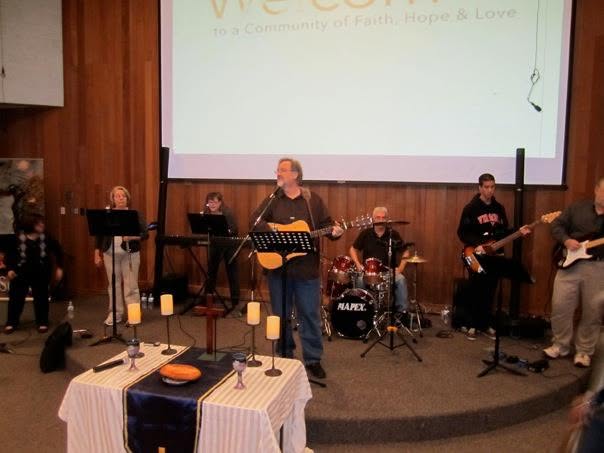
In 2000, I planted my current church, Clear River Community Church in Manassas, Va. Over the years I have sought to develop the church on a three streams model. We are unusual as a charismatic church in that we feature liturgical elements (The Apostles Creed, The Lord’s Prayer, The Sursum Corda), seasonal observances (Lent, Advent, Easter), seeking the presence of God in passionate and intimate worship, teaching that is solidly conservative, and weekly observance of the Eucharist.
“No meeting of the church should take place without the Word, prayers, partaking of the Supper, and almsgiving.”
— Institutes, 4.17.44
In this series we’re going to walk through the story of the Table beginning in Eden and all the way to the feast that never ends. I trust you will grow in your understanding and in your practice and experience of communion. It’s a privilege and joy to share my Table journey with you.
Notes
- Russell D. Moore, “Baptist View: Christ’s Presence as Memorial,” in Understanding Four Views on the Lord’s Supper, ed. John H. Armstrong (Grand Rapids: Zondervan, 2007), 33, ProQuest Ebook Central, http://ebookcentral.proquest.com/lib/dtl/detail.action?docID=5397865. ↩
- Mark Galli, “Whatever Happened to Communion & Baptism?,” Christianity Today, July 10, 2019, https://www.christianitytoday.com/2019/07/whatever-happened-to-communion-baptism/. ↩
- National Association of Evangelicals, “Once-a-Month Communion Is the Norm,” February Evangelical Leaders Survey, February 1, 2013, https://www.nae.org/?p=2548. ↩
- Carol Pipes, “Lord’s Supper: LifeWay Surveys Churches’ Practices, Frequency,” Baptist Press, September 17, 2012, https://www.baptistpress.com/resource-library/news/lords-supper-lifeway-surveys-churches-practices-frequency-2/. Survey of 1,066 Southern Baptist Convention pastors conducted by LifeWay Research, April 1–May 11, 2012. ↩
- Scott Thumma, “2020 Survey of Independent & Nondenominational Churches: Total Survey Frequencies” (Hartford, CT: Hartford Institute for Religion Research, 2020), https://hirr.hartfordinternational.edu/wp-content/uploads/2024/10/2020-Nondenominational-Total-Survey-Frequencies.pdf. Weighted sample, N = 2,307; data collected about 99 percent before the COVID-19 lockdowns. ↩
- Allen C. Myers, ed., The Eerdmans Bible Dictionary (Grand Rapids: Eerdmans, 1987), 356, s.v. “Eucharist.” ↩
- J. E. Miller, “Lectionary,” in The Lexham Bible Dictionary, ed. John D. Barry et al. (Bellingham, WA: Lexham Press, 2016). ↩
- F. L. Cross and E. A. Livingstone, eds., The Oxford Dictionary of the Christian Church, 3rd ed. rev. (Oxford: Oxford University Press, 2005), s.v. “Sursum Corda.” ↩
The sermon
Reflection questions
Please log in to save your reflections.
How the course works
Each week of the course follows the same four steps.
- Read. Read each session on the site during the week before it's preached, then answer its Reflection Questions before Sunday.
- Come to the Table. Hear the sermon and receive communion at Sunday morning worship. Away that week? Watch the recording.
- Reflect. After Sunday's communion, take a few minutes to write in your Table Journal about what you noticed at the Table.
- Gather. Study participants meet on Zoom three times during the course to talk it over together.
Course schedule
Each session opens here at 2 p.m. on the Sunday before it's preached, so you have a full week to read.
| Session | Opens | Preached |
|---|---|---|
| Intro: Welcome to the Table | Open now | Oct 18 |
| 1. Eden to Sinai | Oct 18 | Oct 25 |
| 2. Christ Our Passover | Oct 25 | Nov 1 |
| 3. The Feast That Never Ends | Nov 1 | Nov 8 |
| 4. Who Gets a Seat? | Nov 8 | Nov 15 |
| 5. The Night He Gave It to Us | Nov 15 | Nov 22 |
| 6. The People of Bread | Nov 22 | Nov 29 |
| 7. Four Views of the Table | Nov 29 | Dec 6 |
| 8. Remember, Realign, Receive, Rejoice | Dec 6 | Dec 13 |
| 9. Three Streams, One River | Dec 13 | Dec 20 |